
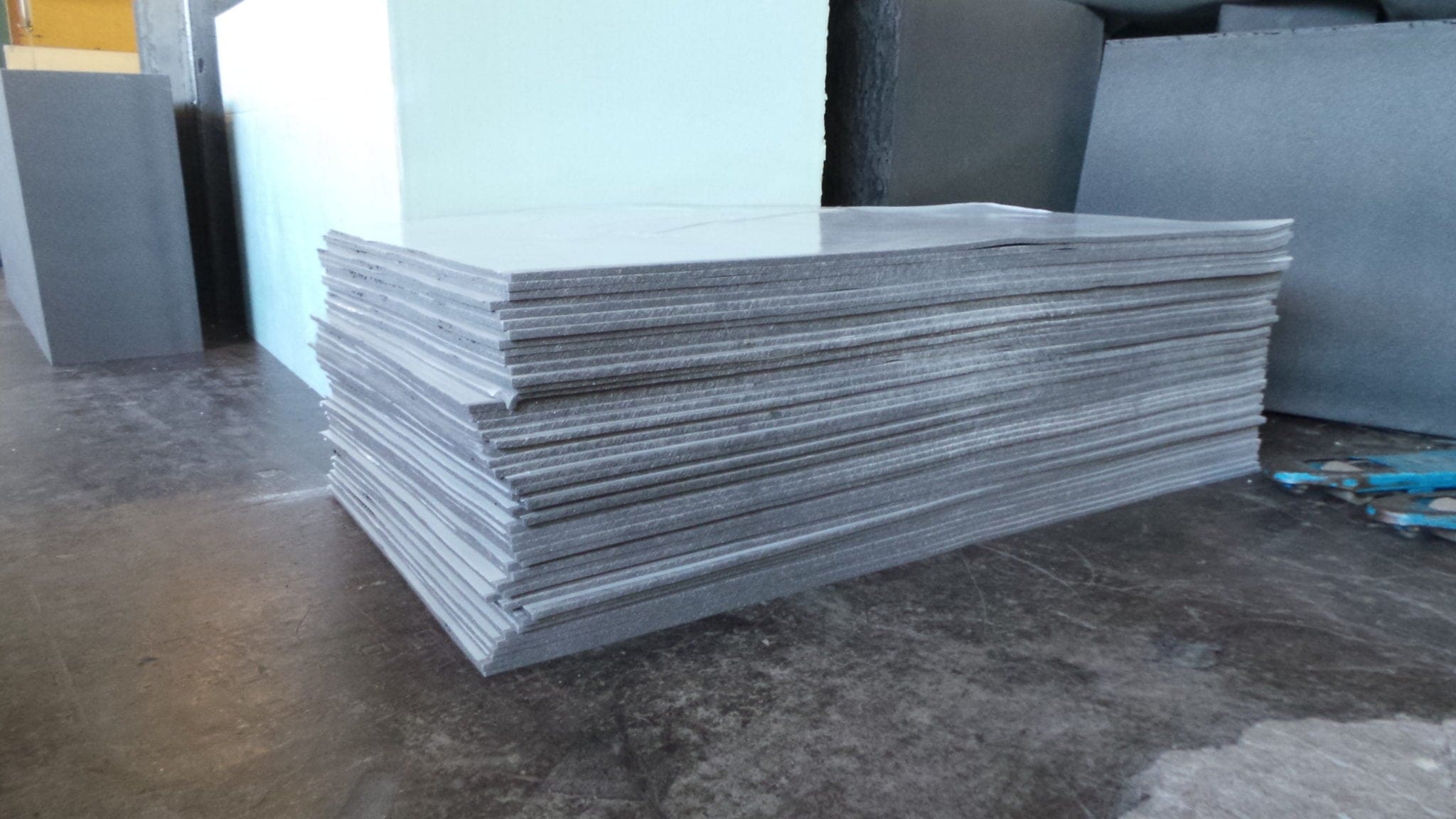
EVA Foam for Industrial Applications: Properties, Uses and Custom Conversion
Choosing the right foam material can have a significant impact on the performance, durability and protection of an industrial component. EVA foam combines a closed-cell structure with resilience and versatility, making it suitable for a wide range of industrial applications. At Rocon Foam, we help businesses select and convert EVA foam according to their specific performance and manufacturing requirements.
EVA foam can provide cushioning, protection and low water absorption, with different grades, densities and thicknesses available to suit the application.
What Is EVA Foam?
EVA stands for ethylene-vinyl acetate. It is a closed-cell copolymer foam that can be produced in different densities, hardnesses and thicknesses. These characteristics allow EVA foam to be specified for applications ranging from protective packaging to fabricated industrial components.
The closed-cell structure helps limit water absorption while providing useful cushioning and resilience. However, the performance of EVA foam varies according to its grade and specification. This means material selection should always consider how the finished component will be used.
At Rocon Foam, we work with customers to identify the characteristics required from the material before determining the most appropriate EVA foam specification.
Businesses looking for an EVA foam supplier in the UK should therefore consider more than simply sheet dimensions or price. Density, hardness, thickness and the operating environment can all influence the performance of the finished component.
Key Performance Benefits of EVA Foam
EVA foam is valued across industrial applications because its properties can be matched to different requirements through careful grade and thickness selection.
Its combination of cushioning, resilience and closed-cell construction can make it suitable for applications where components require protection from movement, handling or impact.
Impact Absorption
Cushioning is an important consideration when foam is being used to protect products or components. EVA foam can absorb and distribute impact energy, helping reduce the forces transferred to the item it is protecting.
The correct specification depends on factors including product weight, fragility, expected impacts and the amount of foam available around the component.
At Rocon Foam, we’ve seen how matching the foam specification to the product is particularly important for protective applications. Selecting a material purely because it feels soft or firm does not necessarily mean it will provide the required level of protection.
Water Resistance
Because EVA has a closed-cell structure, it can provide low water absorption compared with many open-cell foam materials. This can be useful for components that may encounter moisture during storage, handling or use.
However, suitability depends on the particular EVA grade and the conditions involved. Water exposure, temperature and other environmental factors should therefore form part of the specification process.
Density and Hardness
Not all EVA foam performs in the same way. Different densities and hardnesses can provide different levels of support, flexibility and cushioning.
A firmer EVA grade may be suitable where greater support is required, while other grades can provide increased flexibility or cushioning. Thickness also affects the performance of the finished component.
At Rocon Foam, we consider these factors together rather than selecting a material based on density alone. This helps ensure that the foam is appropriate for both the product and its intended environment.
If you’re currently comparing materials, our EVA Foam Selection Guide can help identify the key information required before requesting a sample or quotation.
Common Industrial Applications
The versatility of EVA foam means it can be used across a broad range of industrial applications. These can include protective packaging, cushioning, fabricated components, separators, inserts and other applications requiring a resilient closed-cell foam.
For protective packaging, EVA can be converted into inserts designed around the dimensions of individual products. A correctly designed insert can help locate components securely, limit unwanted movement and provide cushioning during handling and transit.
EVA can also be considered for fabricated industrial parts where a combination of resilience, flexibility and low water absorption is required.
At Rocon Foam, we’ve worked with businesses requiring foam components manufactured around specific product dimensions and application requirements. Understanding the intended use at the beginning of the project helps us assess whether EVA is an appropriate material.
Custom EVA Foam Conversion
Selecting the material is only one part of producing an effective foam component. The foam also needs to be converted accurately and consistently into the required shape.
At Rocon Foam, we can manufacture custom EVA foam components to suit specific product and assembly requirements. The appropriate conversion method depends on factors such as component geometry, tolerances, material thickness and production quantity.
Cutting and Fabrication Options
Custom cutting allows EVA foam to be converted from sheet material into components designed around individual dimensions and profiles.
The appropriate manufacturing process depends on the complexity of the component. Simple shapes and high-volume components may have different production requirements from intricate profiles or lower-volume projects.
Accurate drawings and dimensions are therefore valuable when requesting a quotation. They allow our team to assess the component geometry and determine an appropriate manufacturing approach.
Where EVA is being used for protective packaging, the design should also consider the fit around the product. An insert that is too loose may allow unwanted movement, while an inappropriate fit could make products difficult to insert or remove.
Choosing the Right EVA Foam
When specifying EVA foam, businesses should consider the complete application rather than focusing on a single material property.
Important factors include the dimensions of the component, required thickness, density or hardness, expected loads, cushioning requirements and environmental exposure. Production quantities and dimensional tolerances should also be considered when custom fabrication is required.
At Rocon Foam, we can use this information to help assess the appropriate material and conversion method. Where the final specification has not yet been established, discussing the application with our team can help narrow down the available options.
Requesting a material sample can also be useful when evaluating the appearance, feel and general characteristics of a particular EVA foam grade before moving towards production.
If you’re looking for custom EVA foam for an industrial application, request an EVA foam sample or quotation from Rocon Foam. Our team can discuss your requirements and help identify an appropriate material and manufacturing solution.
FAQs
Where can I buy EVA foam sheets in the UK?
Rocon Foam supplies EVA foam for a range of industrial and commercial applications in the UK. If you require EVA foam sheets or converted components, contact our team with the required dimensions, quantity and application details so we can discuss suitable options.
Can EVA foam be cut to custom shapes and sizes?
Yes. EVA foam can be converted into custom shapes and sizes for applications such as protective inserts, cushioning and fabricated industrial components. Providing Rocon Foam with a drawing or accurate dimensions helps us assess the most appropriate manufacturing method.
What density of EVA foam should I specify?
The appropriate density depends on the application rather than there being one density suitable for every project. Product weight, cushioning requirements, hardness, thickness and environmental conditions should all be considered. Rocon Foam can help assess these factors when discussing your specification.
Is EVA foam suitable for protective packaging?
EVA foam can be suitable for protective packaging because its closed-cell structure and cushioning properties can help protect and locate products during handling and transit. The correct grade, thickness and insert design should be selected according to the product and expected transit conditions.
How quickly can Rocon Foam supply custom EVA foam components?
Lead times depend on the EVA grade, component design, quantity, conversion method and current production requirements. Contact Rocon Foam with your dimensions or drawing and required quantity, and our team can provide a quotation and advise on expected lead time.